2020-2022
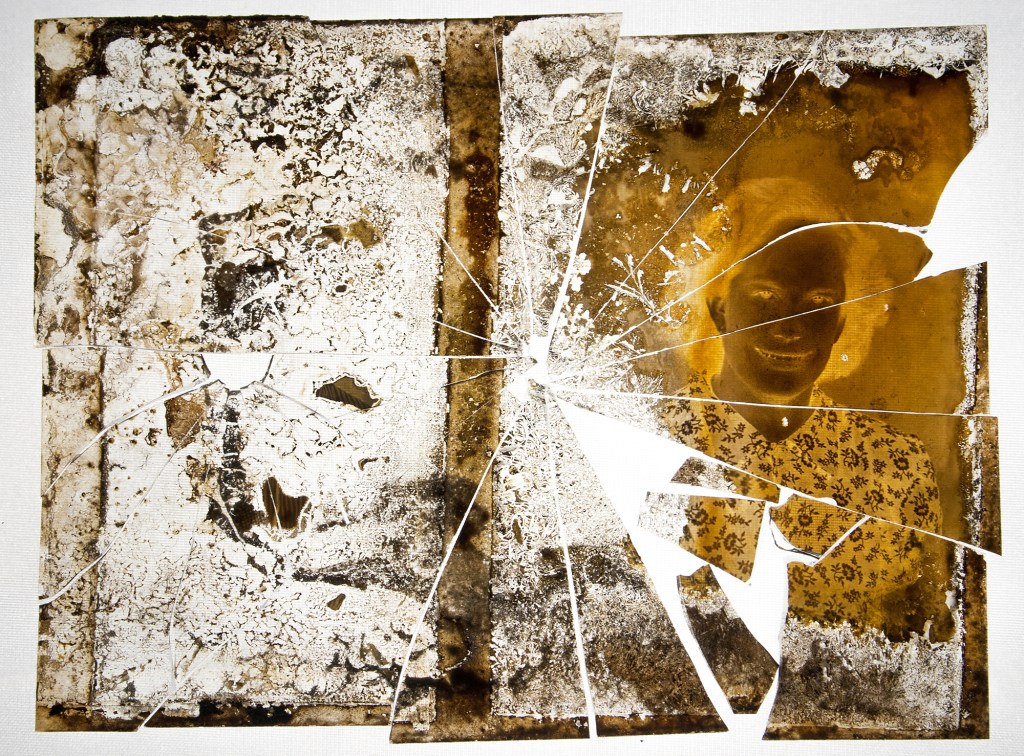
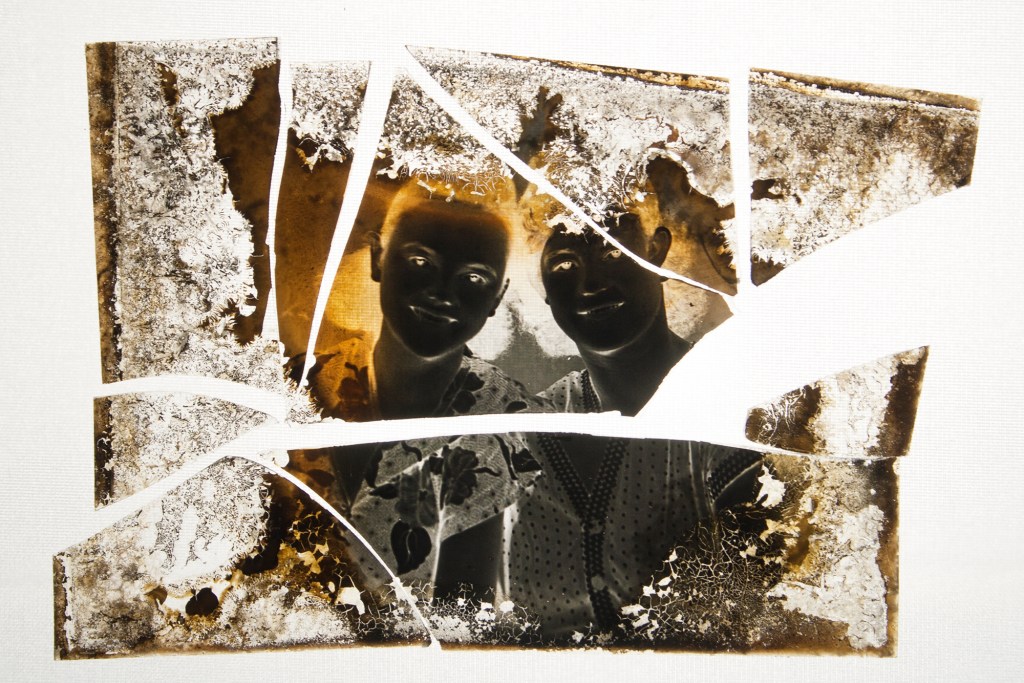
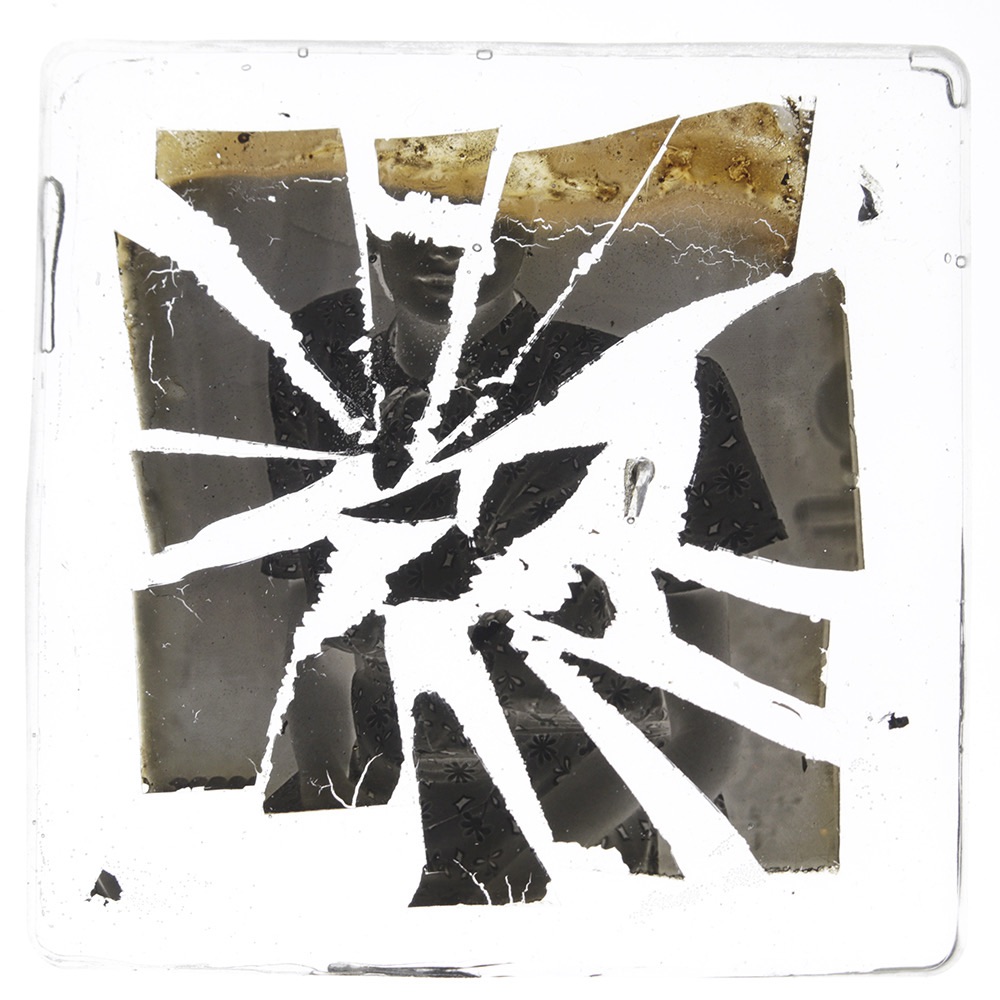
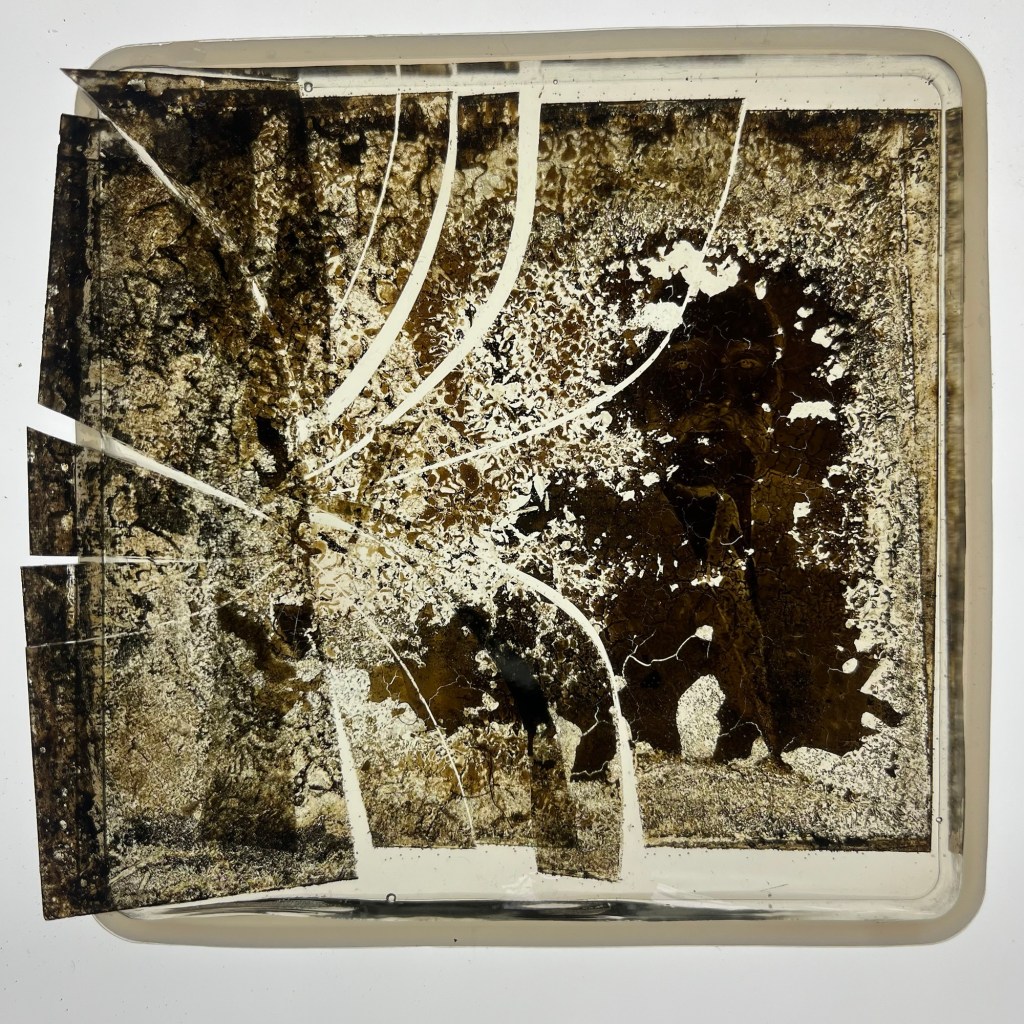
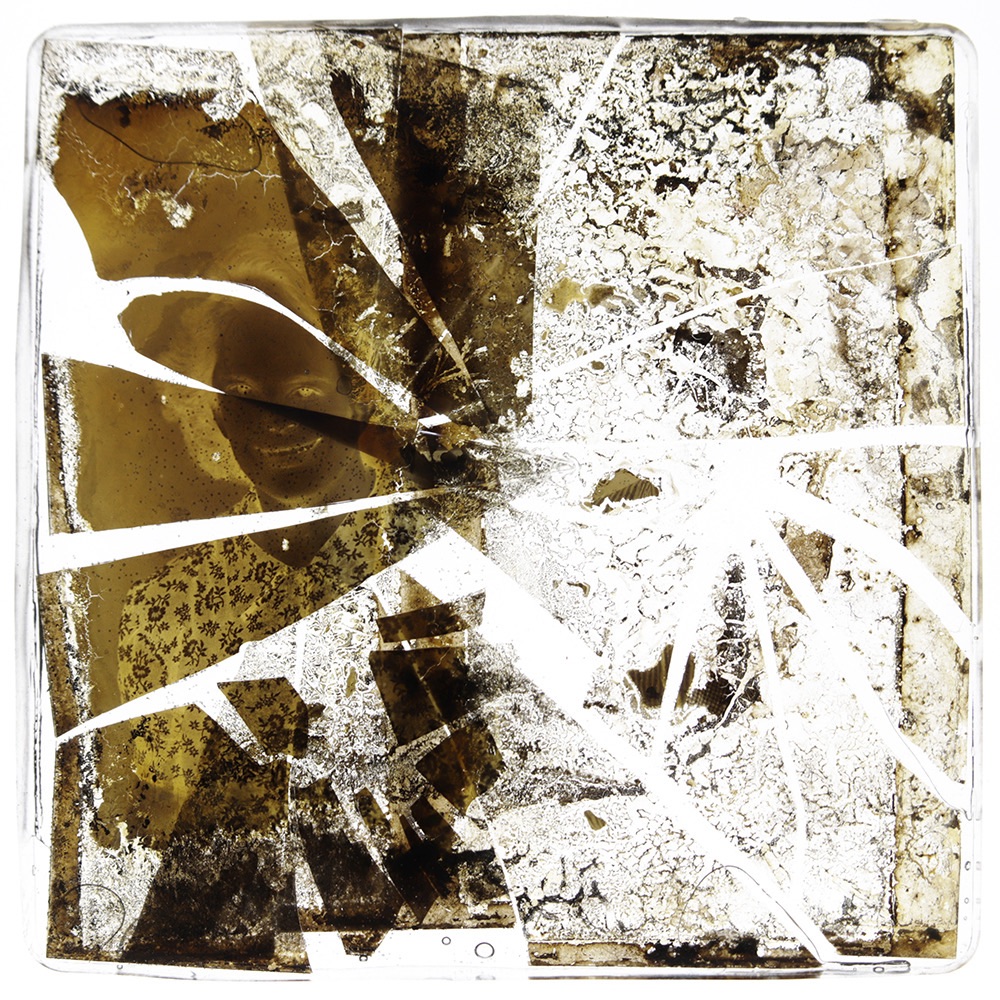
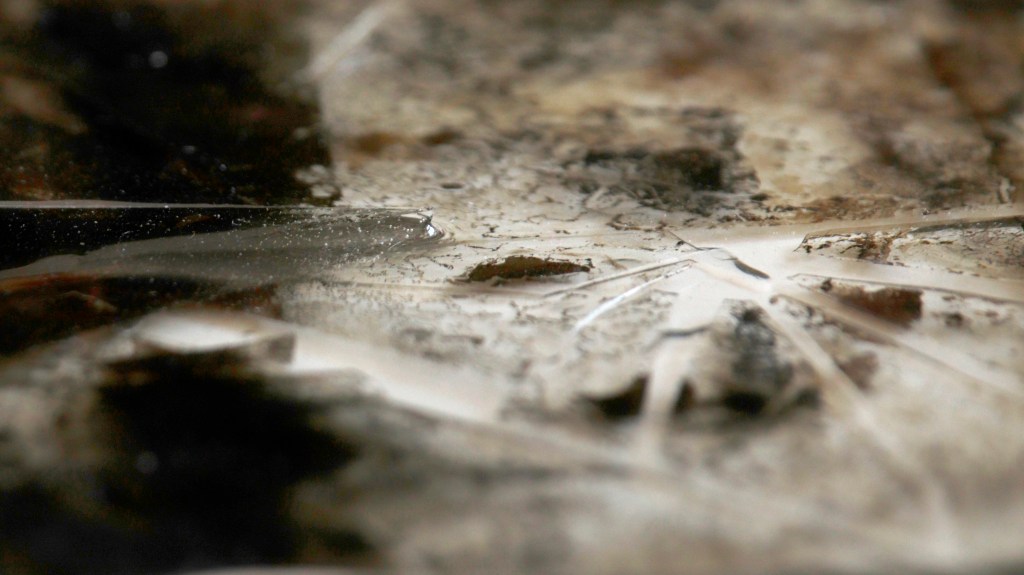
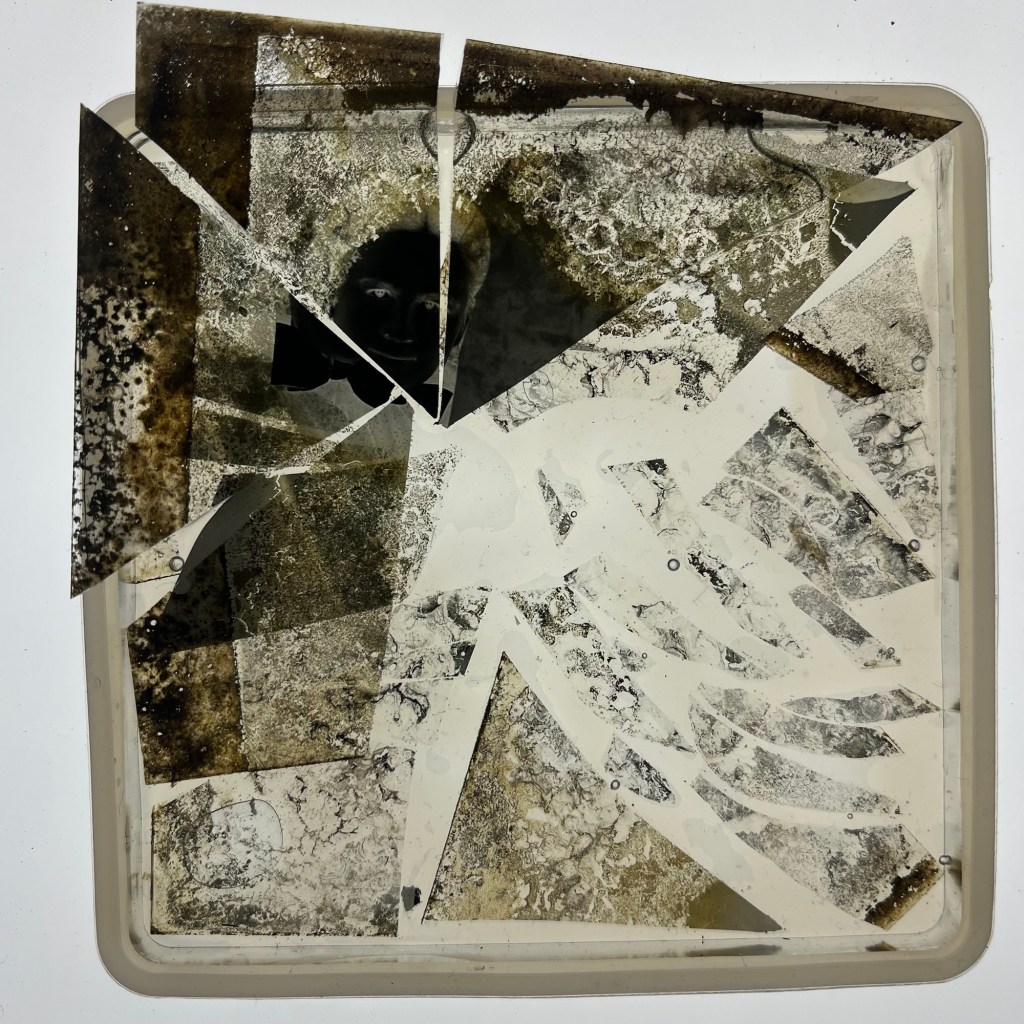
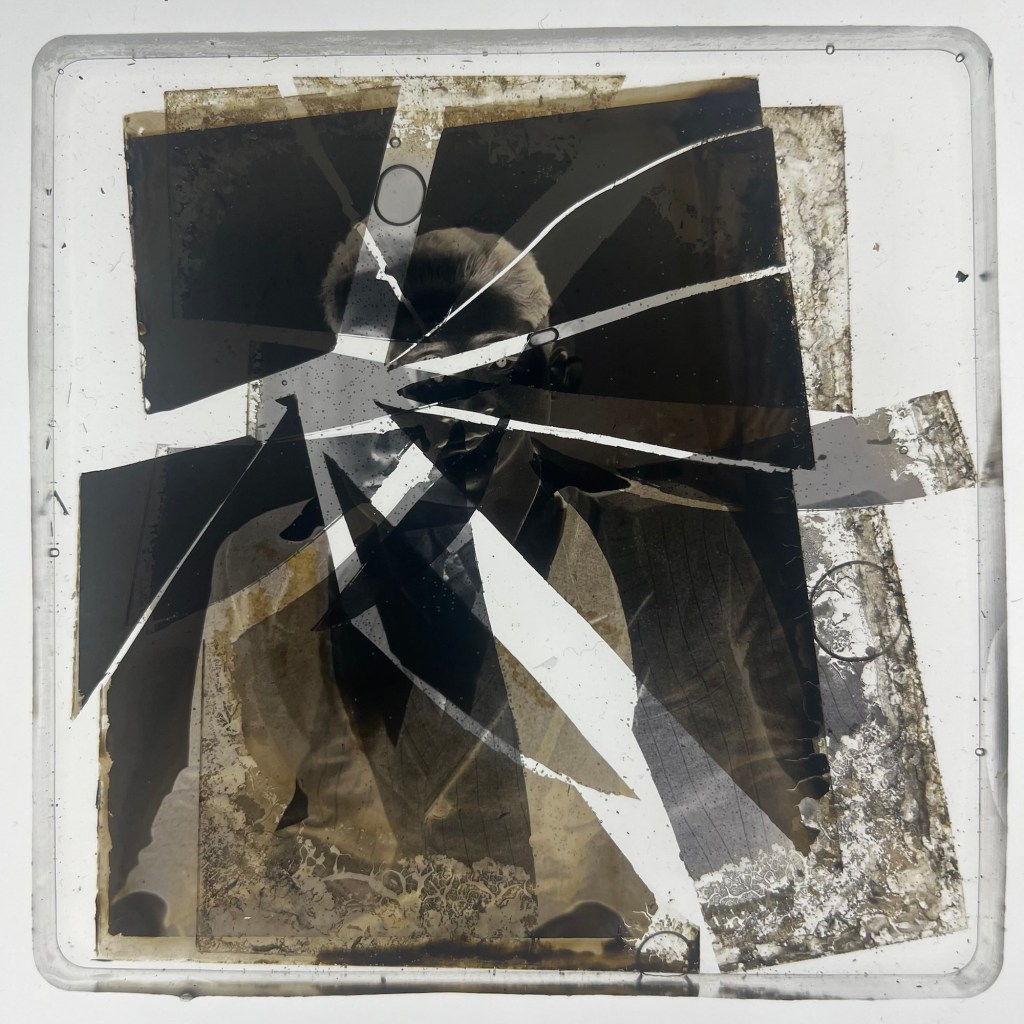
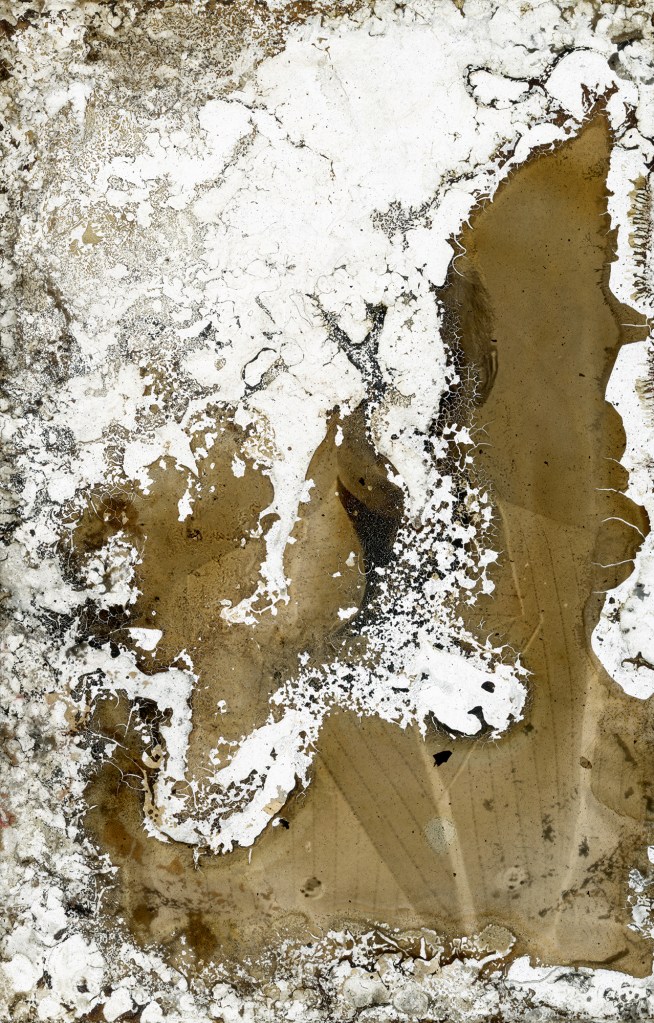
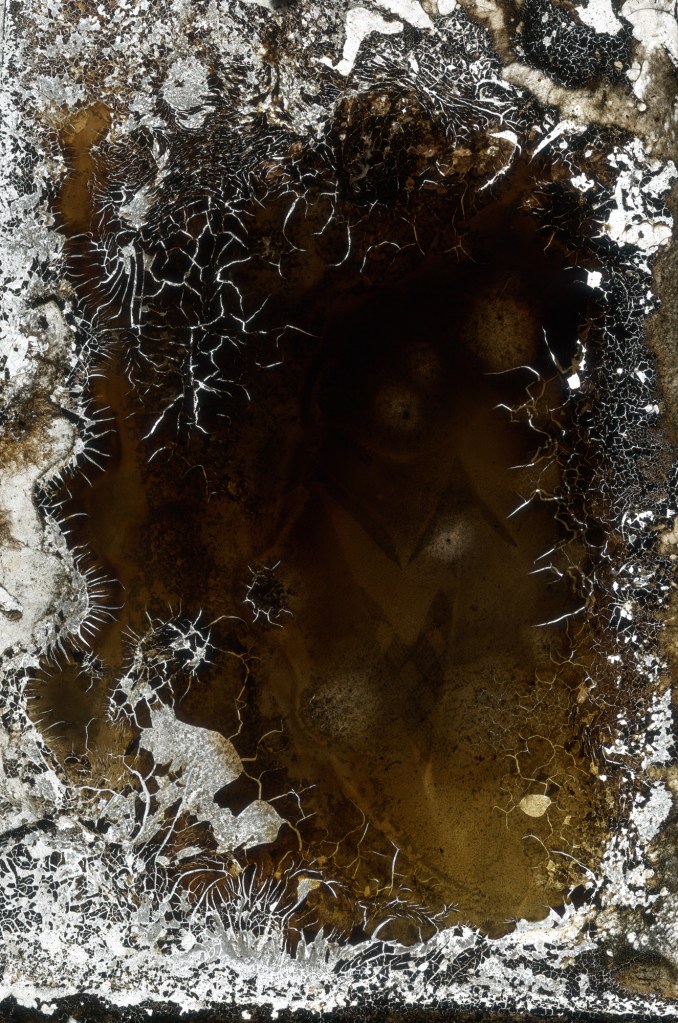
In May 2020, through an intermediary, I purchased a box of broken and damaged negative glass plates – portraits – found at a construction site; which must have been a working photo studio at the end of 1940s. When I learned about the existence of these objects I was immediately intrigued; as I never worked with such extremely emptied photographs. Through Martha Langford, I usually argue that beyond their visual coded surface, family photographs’ meanings are open-ended, as they can be always re-activated through a storyteller. In my practice, to work against forgetting, I seek storytellers to reactivate and excavate meanings beneath the visual surface. But, in this case, such practice is not applicable. These photographs never performed as objects of memory in a domestic ‘remembrance environment’. Furthermore, they never had a custodian whose responsibility was to protect these objects against material and contextual decay. Indeed, what I am fascinated by, is decay itself; that I caught these glass plates in a particular period, during their metamorphosis. The objects that were invented to record and store information against time; due to dust, which Rosalind Krauss argues ‘is a physical index of time” transformed into a new entity. These were no longer negatives in the traditional sense; not only dust contaminated the visual surface but coated both sides of the glass plates morphing them three-dimensional. Similarly to Man Ray’s Dustbreeding, which Krauss interrogated in her argument on the index, the dust particles began to perform as silver gelatin particles; as
information. Dust, therefore, has an overwriting attribute acting as palimpsest simultaneously removes and adds to the content; revealing a dynamic between forgetting and remembering. Therefore, these broken and damaged negatives plates, in their quality and entity, encompass and nominate the triangulation between dust, memory and photography.
I approach this project as a continuity of previous photographic-research practice that interrogated such dynamics. In my 2012 Master’s Research project, through Mark Cousins’ seminal essay series ‘The Ugly’, I argued that dust is similar to the ‘ugly object’, it interrupts the visual syntax, overwrites and contaminates. I identified dust as a transgressive, uncontrollable, uncodable entity, such as Barthes’ ‘punctum’ that exists latently beyond/beneath the visual layers of the photograph. In my practice-led PhD research 2015-2019, I further explored this concept in relation to silenced memories of loss, painful pasts, trauma and grief. As Cathy Caruth explains, trauma is not an event, but a mark with resurfacing and recurring impact. Trauma has a long-lasting cyclical temporal nature, similarly to grief, we need to process and address what we lost, otherwise it grows with us. In my practice, I performed gestures of re-enactments of loss to work through, for example as a visual analogy of how my grandparents silenced difficult histories, I began to erase family photographs. Through such acts I learned that to bring these to the surface, we need to perform acts, which at first glance, seems anti-photographic because it constructs through deconstruction.
I find similar qualities in these broken and damaged glass negatives. Their damage and destruction is not a negation, but an addition that needs to be studied and understood. I regard these analogous to traumatic marks. These breaks, bruises and scratches, embed and embody in us, become part of our constitution, changing us, yet simultaneously we continue to exist projecting a congruent self-image.
From Silver To Dust aims to explore, and further interrogate these contradicting and counteracting dynamics between remembrance and forgetting, being broken yet whole; and
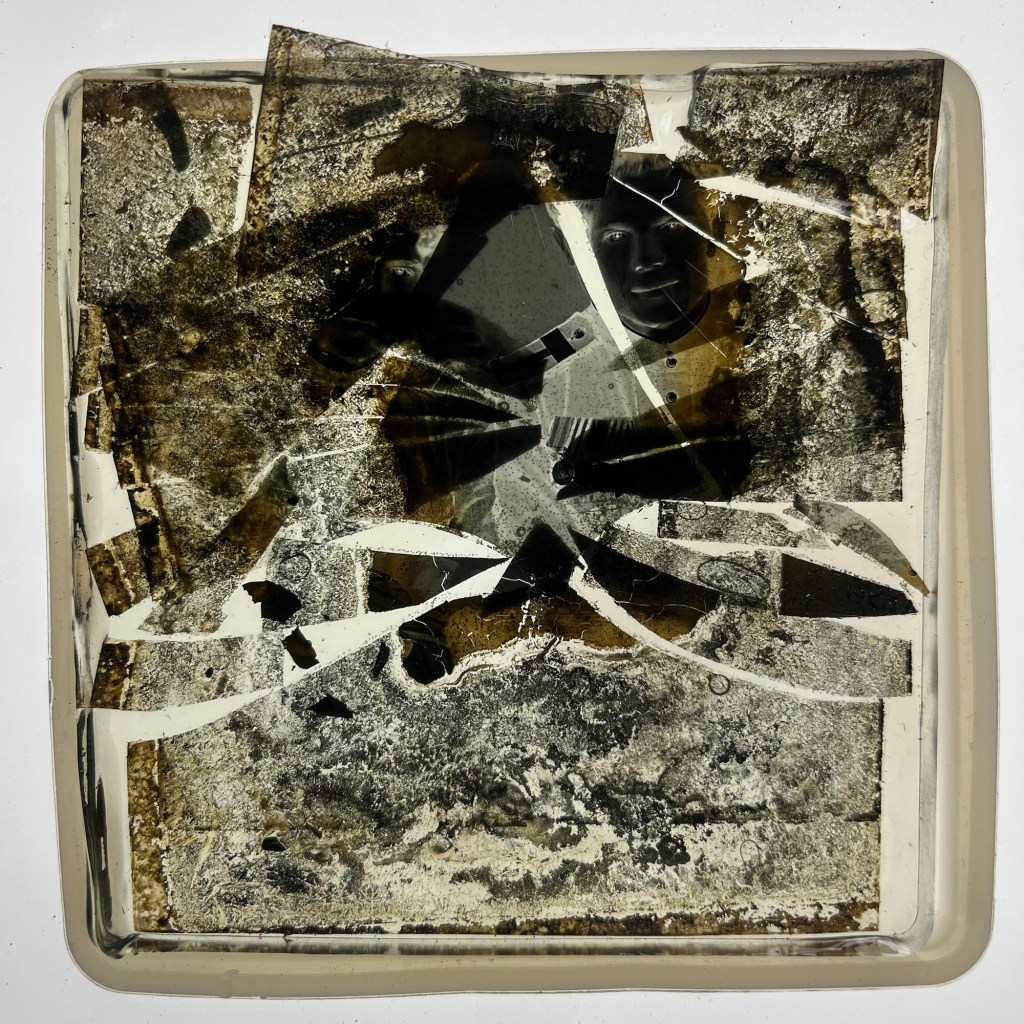
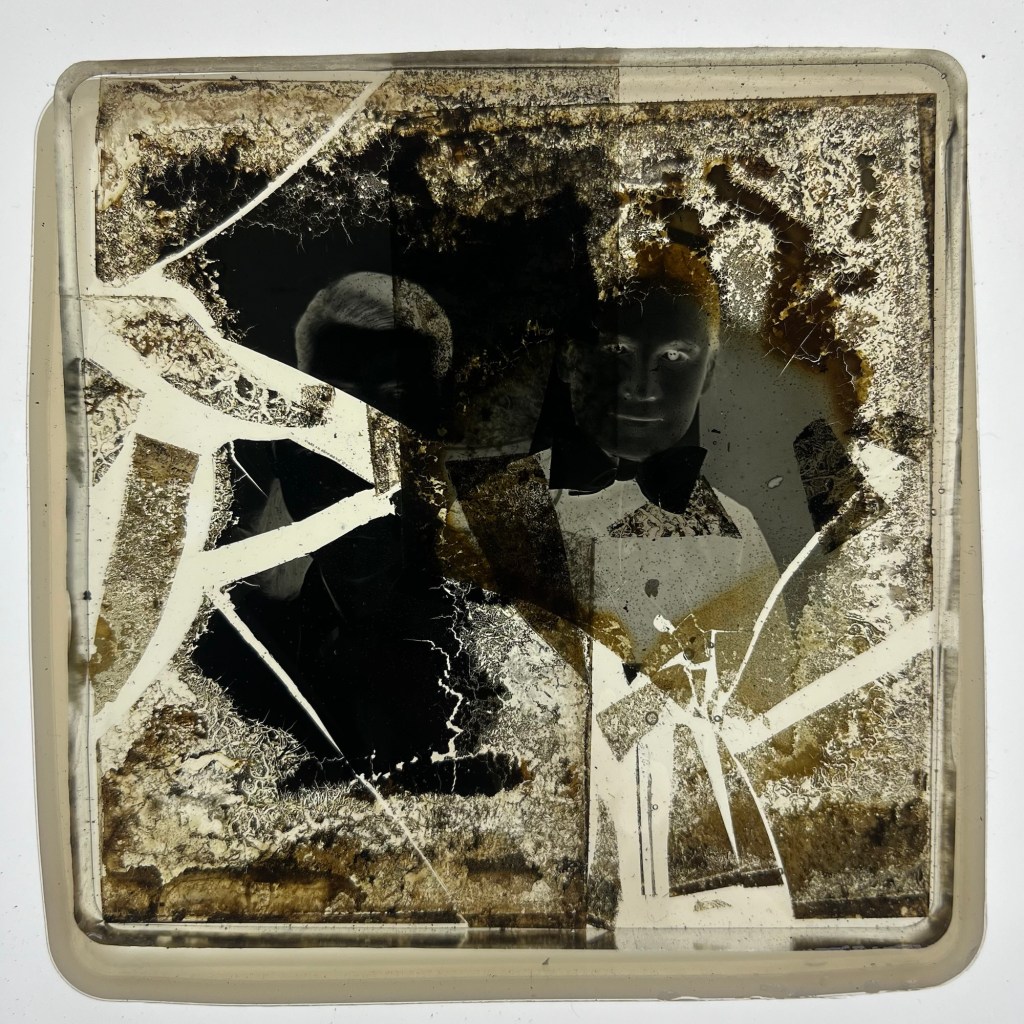
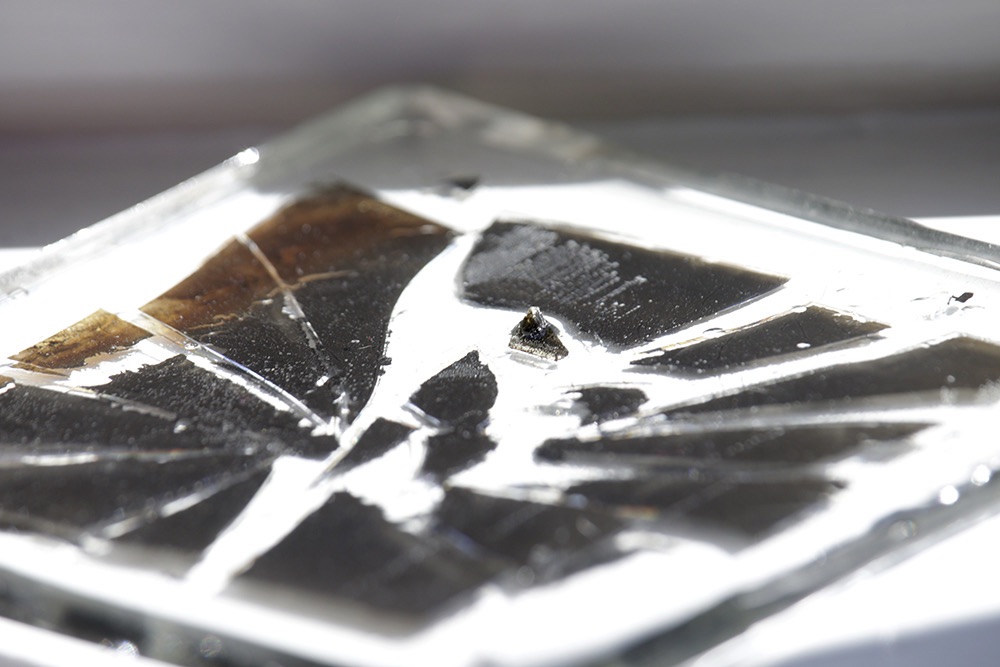
being simultaneously negative and positive. The practice embraces some destruction of these plates, which is not against them; but it is done with an intent to further interrogate and preserve this tension and the temporariness of their transformation, the ‘in-between’, state of the plates. By preservation, I don’t mean the restoration or cleaning of the plates. Indeed, as part of the practice, I reconfigure these pieces of damaged and broken glass negative pieces, by casting these fragments of information in resin or epoxy; creating 10x10x1cm glass plates that capture these as 3D objects.
 Eszter Biró